How to Create a Digital Product Passport: The Six Harmonised Standards as a Build Spec
Most teams asking how to create a Digital Product Passport are really asking which platform to buy. That is the wrong first question, and it is the reason so many DPP programmes stall at month four: the vendor is selected, the contract is signed, and then the project discovers there is no product identifier scheme, no owner for substance data, and no decision about what goes on the physical item.
There is now a better first question, because there is a specification. On 14 July 2026 the Commission adopted Implementing Decision (EU) 2026/1736, citing the first harmonised standards for the Digital Product Passport in the Official Journal. Conformity with them confers a presumption of conformity with the DPP requirements in Articles 10 and 11 of ESPR, to the extent the standards cover them.
Six standards, six pieces of work. None of them is a software purchase.
The six standards, and what each one makes you decide
| Standard | Subject | The decision it forces |
|---|---|---|
| EN 18219:2026 | Unique identifiers | What identifies a product, a model, an operator - and at what granularity |
| EN 18220:2026 | Data carriers | What physically goes on the product, and how it survives the product |
| EN 18221:2026 | Data storage, archiving and persistence | Where the passport lives, and for how long after you stop making it |
| EN 18216:2026 | Data exchange protocols | How supplier data gets in and authority data gets out |
| EN 18222:2026 | APIs for passport lifecycle and searchability | Who can query it, and what happens when it changes |
| EN 18223:2026 | System interoperability | Whether anyone else's system can read yours |
Reference lists for these were published by the Commission and cited in the Official Journal in July 2026.
Step 1: settle identifiers before anything else (EN 18219)
Every passport regulation so far requires a unique product identifier, and the choice of scheme is not a technical detail - it decides the granularity of your entire programme.
The question to answer first is what a passport is about. The battery passport is per unit: state of health means nothing at model level. The toy passport is per model. Get this wrong and you either generate a hundred thousand passports you cannot populate, or one passport that cannot carry the per-item data a later regulation demands.
Then decide where the identifier comes from. You need an operator identifier and a facility identifier alongside the product one, and they need to be stable across an ERP migration, a factory change and a corporate restructure. If your product identifiers today are SKUs that marketing renumbers each season, that is the first thing to fix, and it is an internal governance job, not a vendor feature.
Step 2: decide what goes on the physical product (EN 18220)
The data carrier is the part of the passport that has to survive manufacturing, transport, shelf life and, for durable goods, years of use. Deciding it late is expensive, because it touches packaging artwork, label suppliers, moulds and print runs.
The regulations are permissive about which carrier - QR code, NFC, RFID, or another automatic identification medium - and unhelpfully silent about placement. So the real constraints are physical:
- Does it survive the product's life? A printed label on a garment tag is fine for a season and useless in year eight. For anything durable, the carrier has to be on the product, not the packaging.
- Can it be read where it matters? By a consumer in a shop, a recycler on a sorting line, a customs officer at a border, and a repairer with the product in pieces.
- Does it resolve when your systems change? The carrier is printed once and permanent. What it points to must be a resolvable identifier, not a URL tied to a hosting arrangement you might leave.
That last point is the one that catches people. A carrier encoding a link to your current vendor's domain becomes a liability the moment you switch vendors.
Step 3: choose a retention horizon you can honour (EN 18221)
Persistence is a legal requirement with a number attached, and the numbers differ sharply by sector. Toys and detergents: technical documentation and passport kept for ten years after placing on the market. The construction DPP system: accessible for 25 years after the last product of that type is placed on the market.
Two consequences follow. First, take your retention assumption from the longest-lived market you sell into. Second, the passport has to outlive your vendor relationship, which means an exit path - a documented export format and a tested restore - is a procurement requirement, not a nice-to-have. Ask any prospective platform what happens to live passports if you stop paying them, and make the answer contractual.
Step 4: build the supplier data pipeline (EN 18216)
This is where DPP programmes actually fail, and no platform fixes it.
The fields that matter most - substance content, recycled content, carbon footprint - are held by suppliers you may not have a direct relationship with. Collecting them means a contractual mechanism (a clause requiring structured data to a named schema), a technical mechanism (an exchange protocol, not a spreadsheet emailed to a shared inbox), and a quality mechanism (what you do when a tier-three supplier sends a number it cannot evidence).
Start this before the software. It is the only part of the work with a multi-year lead time, and it is identical whichever platform you eventually buy.
Step 5: model access as configuration, not code (EN 18222)
Every passport regime so far splits its data by who is asking. The battery passport does it in three tiers under Annex XIII: public, authorities, and persons with a legitimate interest. Other regimes will draw the lines elsewhere.
And the lines can move after you build. The implementing act defining who has a legitimate interest in non-public battery data was legally due on 18 August 2026 and was not adopted, with the Commission's timetable now pointing to Q4 2026 - while the 18 February 2027 passport obligation stayed exactly where it was.
So the design rule is simple: never hard-code an access tier. Build a permission model in which a tier is a configuration object with a membership rule, a field list and an audit trail, so that when the rules finally arrive you change a configuration rather than a codebase.
Step 6: register, and treat registration as a release step (EN 18223)
The EU central DPP Registry has been operational since 20 July 2026. Registration is what makes a passport findable by an authority, and under the detergents regulation the passport must be declared at customs when an imported product is presented at the border. A passport that exists but is not registered is, from an enforcement point of view, a product without a passport.
The practical implication is that registration belongs in your product release process, next to the steps that generate the declaration of conformity and the label - not in a quarterly compliance catch-up.
Then, and only then, choose a platform
By this point you have an identifier scheme, a carrier decision, a retention horizon, a supplier data pipeline, an access model and a registration step. Those are your requirements, and they are specific enough to evaluate a vendor against rather than being led by one.
And notice what the sequence implies about the ESPR product groups still waiting for a delegated act - which, in September 2026, is all of them. The six standards apply horizontally. Every step above can be completed now, without knowing a single field your act will demand, because none of it is field-specific. The fields are the last thing you add, and the easiest.
The work that takes years is the work you can start this quarter.
Related reading
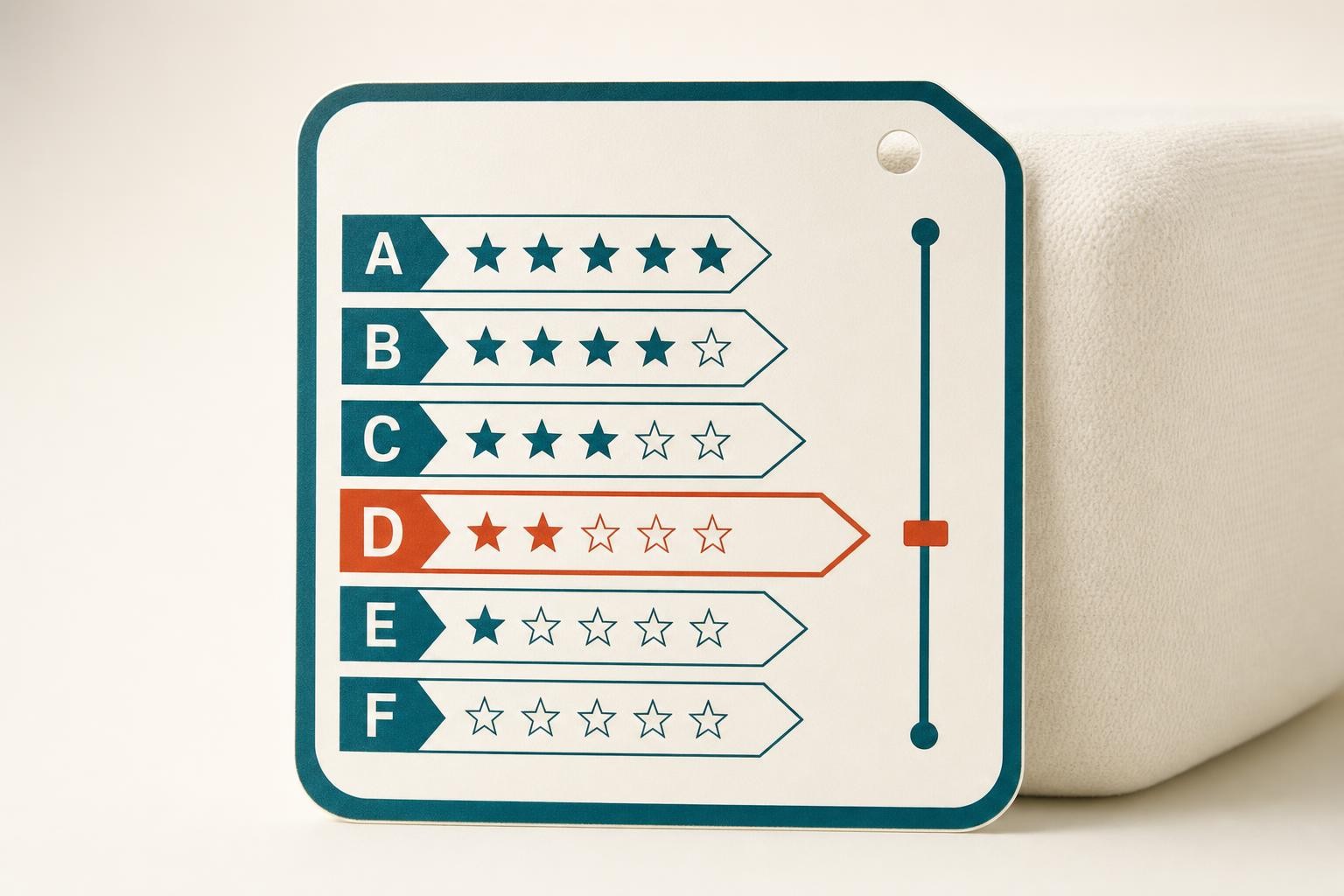
ESPR Performance Classes: The Ranking System That Makes Compliance Irrelevant to Competitiveness
ESPR's classes of performance rank compliant products against each other. A product can be fully lawful and still be publicly graded near the bottom of its category. Here's what that means for your product roadmap.
Who Sees What in a Digital Product Passport: Access Rights, Customs and Confidential Business Data
A passport is not a public web page. ESPR gives consumers, repairers, recyclers, authorities and customs different views of the data. Here is how role-based access works, what the pending security standards add, and how to protect trade secrets.
The ESPR Textiles Delegated Act: What the Draft Is Expected to Require from Apparel Brands
The textiles delegated act is the next big ESPR measure for fashion. Here is what the JRC preparatory work points to on durability, recyclability of mixed fibres and data points, the likely timeline, and how brands should prepare now.